
How to Hold a Harmonica: Pro Tips for Perfect Tone and Comfortable Harp Gripping

Hello! In today's free harmonica lesson we'll be looking at holding the harmonica properly.
Holding a harmonica might seem really simple - in fact you might have picked it up without much thought on this but the way you grip the harp can make a huge difference to both how it sounds and how comfortable it is to hold. Many beginners struggle with producing a clear tone or controlling volume because their hand position restricts airflow or causes tension.
This guide breaks down the essentials of harmonica grip for total newbies.
If you'd like to watch my YouTube video of the lesson, you can do so below. Otherwise, read on for the lesson.
Why Proper Harmonica Grip Matters
The harmonica is a small instrument, but it requires precise control. Your hands shape the sound by controlling airflow and adding effects. Learning how to hold the harmonica correctly will help you play with better tone and volume (and make it easier to play). If you hold the harmonica too tightly, you risk muffling the sound or causing hand fatigue. Too loose and the instrument might slip or your tone will lack focus.
A good grip helps you:
Produce a clear, strong tone by allowing smooth airflow
Control volume without straining your breath
Add expression through hand movements like cup shaping
Stay comfortable during long practice or performance sessions
Getting this right from the start builds a solid foundation for all the techniques you’ll learn later.
Basic Hand Position for Beginners
Most players hold the harmonica in their left hand and play with their right, but you can switch if it feels more natural.
Hold the harmonica between your thumb and index finger
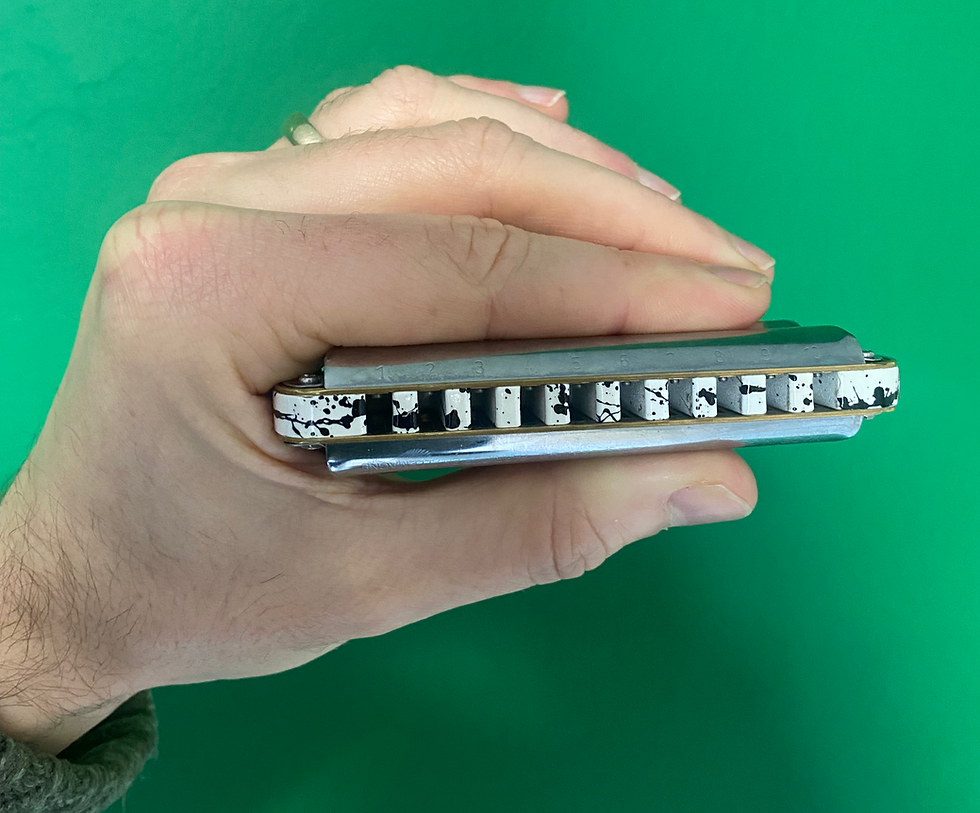
Place your thumb on the bottom side and your index finger on top, near the middle of the harmonica. This grip gives you control without squeezing too hard. The low notes should be on the left (hole 1), high notes on the right (hole 10).
Let the harmonica rest lightly on your fingers
Avoid gripping tightly. The harmonica should feel secure but not pinched. This prevents tension and injury.
Keep your other fingers relaxed
Curl your remaining fingers gently around the harmonica or let them rest naturally. I like taper my fingers to direct the air fowards.
How to Use Your Hands to Shape a Great Sound
The above grip uses only one hand. However, your other hand can change the tone and volume on your sound.
Open cup: Keep your grip hand loose and open behind the harmonica for a bright, clear sound.
Closed cup: Use your free 'cupping' hand to trap the sound. This creates a warmer, fuller tone and allows you to add vibrato by moving your hand.
Hand tremolo: Gently rock your cupping hand back and forth to modulate the sound. This adds expression and depth.
Practise switching between open and closed cup positions to hear how your grip affects the sound.
Common Mistakes to Avoid When Holding Harmonica
Beginners often make these grip errors that affect tone and comfort:
Gripping too tightly
This muffles the sound and tires your hand quickly.
Using only fingertips
This can make the harmonica unstable and harder to control.
Ignoring hand position changes
Not experimenting with cupping limits your expressive options.
Recognising these mistakes early helps you correct your technique before bad habits form.
Practicing Your Grip
Improving your harmonica grip takes practice. Try these exercises:
Hold and breathe
Hold the harmonica with your basic grip and blow gently through the holes. Focus on keeping your hand relaxed.
Cup and uncup
Alternate between open and closed hand positions while playing a simple note or scale.
Vibrato practice
Once comfortable, add gentle hand vibrato by rocking your cupped hand slowly.
Record yourself
Listening back helps you hear how your grip affects tone and volume.
Alternative Hand Grip
Before we wrap up, I'll throw a spanner in the works: there are actually multiple ways to hold a harmonica. Some players wedge the harmonica between the base of their index fingers (as seen in the image below). This is common for amplified playing, when you need to hold a microphone at the same time as holding the harp, but it can also give a great acoustic sond. The bottom line is: use the grip that works for you.

Summary
Mastering how to hold the harmonica is a key step for beginners aiming to play with clear tone, good volume, and comfort. Use your thumb and index finger to hold the instrument lightly, keep your other fingers relaxed, and experiment with hand cupping to shape your sound. Avoid gripping too tightly. Practice regularly with attention to your grip and posture to build good habits.
Start with these basics, and you’ll find your harmonica playing becomes more enjoyable and expressive. Keep your hands relaxed, listen to your tone, and adjust your grip as you grow. The right hold makes all the difference in sounding like a pro.
I hope you enjoyed this free harmonica lesson on holding the harmonica for beginners.
Want step-by-step harmonica lessons?
Why not try my online harmonica school? Start your free trial today! Click here for more details.


.png)